
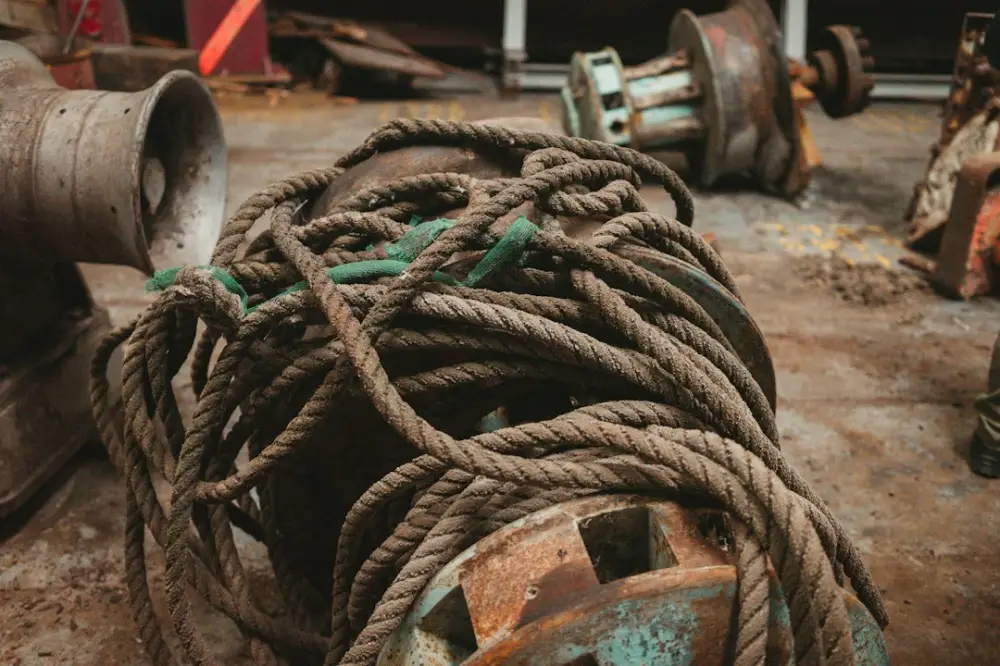
Planning questions for qualified marine specialists are targeted inquiries used to evaluate mechanical, environmental, and regulatory constraints of maritime projects. These questions address load dynamics, site-specific coastal variables, and equipment limitations to ensure that winch systems and infrastructure can withstand the physical forces inherent to marine environments and coastal operations in 2026.
Specialists use these questions to bridge the gap between theoretical manufacturer specifications and real-world application. By focusing on variables like salt spray, tide surges, and material fatigue, these inquiries prevent equipment failure and ensure personnel safety during complex recovery or mooring operations.
Why rigorous planning questions matter
Marine environments are unforgiving to equipment that is only "mostly" prepared. In 2026, as coastal weather patterns become more volatile, the cost of a mechanical failure during a heavy lift or a vessel mooring can reach millions of dollars in property damage and environmental fines. Planning questions force a specialist to look beyond the surface of a project and identify hidden risks, such as galvanic corrosion or subtle changes in sediment stability.
For example, a specialist preparing for a salvage operation in a high-current tidal zone must ask about the peak dynamic load. Without this specific inquiry, they might rely on a static load rating that doesn't account for the kinetic energy of moving water, leading to a snapped line or a burnt-out winch motor.
How marine planning workflows function
The planning process begins long before the first line is cast. It starts with a site survey and a review of the mechanical assets available. A specialist integrates these questions into the procurement and installation phases to ensure every component is fit for purpose. This involves checking the compatibility of synthetic ropes with existing drum textures and verifying that power supplies can handle the peak amperage of electric winches under load.
In practice, this workflow often involves a multi-disciplinary approach. A naval architect might answer questions regarding the structural integrity of the deck, while a winch technician addresses the internal gear ratios. This collaborative questioning ensures that when the system is under tension, every part of the infrastructure is performing within its safe working limits.
Common misconceptions in marine planning
A frequent error is assuming that a winch's maximum pull rating is available at all times. In reality, the pulling power decreases as more layers of rope are wound onto the drum. Specialists must debunk the myth that a 10,000-lb winch will always pull 10,000 lbs, especially when interpreting winch load ratings and manufacturer data for deep-spool operations.
Another misconception is that "marine-grade" is a universal standard. A winch housing designed for a freshwater lake will fail rapidly in the North Sea. Planning questions must specify the exact environment to ensure the metallurgy and seals are appropriate for the specific salinity and temperature of the operation site.
Key technical terms for marine specialists
- Safe Working Load (SWL): The maximum force that a piece of lifting equipment can safely exert without fear of breaking.
- Fleet Angle: The angle between the center line of the winch drum and the lead to the first sheave; improper angles cause uneven spooling.
- Synthetic Creep: The slow, permanent deformation of synthetic fibers under constant high tension over long periods.
- Dynamic Loading: The additional force exerted on a system due to movement, such as waves lifting a vessel while it is being winched.
- Galvanic Corrosion: An electrochemical process where one metal corrodes when in electrical contact with another in a saltwater electrolyte.
Practical tips for effective planning
When conducting a planning session, always document the answers in a centralized project log. This creates a trail of accountability and a reference point for future maintenance. Specialists should also prioritize "worst-case scenario" questioning. Instead of asking if the winch can handle the average tide, ask how it will perform during a 50-year storm event combined with a power failure.
It is also helpful to consult local maritime authorities or databases, such as the International Maritime Organization, for updated safety standards. Using these resources to validate planning questions ensures that the project remains compliant with 2026 international regulations.
First steps for implementing marine planning protocols
- Start by conducting a comprehensive site audit to identify environmental stressors like tidal range, peak currents, and water salinity.
- First step in mechanical prep is to cross-reference your current winch inventory against the specific load requirements of the 2026 project.
- To begin the safety review, integrate the 15 planning questions into your standard operating procedure (SOP) documentation for all deck officers.
- Finally, verify that all mounting surfaces are inspected by exploring the foundations of coastal infrastructure to ensure structural integrity under peak tension.
15 essential questions for 2026 projects
The following questions serve as a toolkit for specialists to ensure operational literacy and mechanical safety in various coastal and marine scenarios.
1. What is the peak dynamic load during a storm surge?
Static weights are rarely the limit in marine settings. Specialists must calculate the added force of water movement against the hull or load during peak environmental stress.
2. How does the fleet angle affect spooling efficiency?
If the lead block is too close to the drum, the rope will bunch on one side, causing potential jams or uneven tension that can damage the winch housing.
3. Is the line speed compatible with the recovery timeline?
In emergency recovery, a slow gear ratio might be too sluggish, while a fast one might lack the necessary torque to overcome initial suction in sandy bottoms.
4. What is the specific salt-spray rating of the motor?
Verify the IP (Ingress Protection) rating for electric motors to ensure they can withstand direct splashes or prolonged exposure to mist without shorting.
5. Does the foundation depth account for sediment erosion?
This is vital when exploring the foundations of coastal infrastructure for permanent winch installations on piers or jetties.
6. Is the power supply redundant for emergency operations?
Specialists should ask if there is a manual override or a secondary battery bank to ensure the load can be safely lowered if the main grid fails.
7. How does synthetic rope elongation affect braking?
Synthetic lines stretch. Specialists need to know how much "snap-back" or extra distance is required for the brake to effectively hold the load.
8. What is the maintenance interval for the gear system?
Plan for downtime by knowing exactly how many hours of operation are permitted before the planetary gears require fresh lubrication or inspection.
9. Are the mounting bolts rated for shear stress?
The winch is only as strong as the bolts holding it to the deck. Ensure the alloy used is resistant to both shear force and saltwater-induced brittleness.
10. How will the winch handle heat dissipation?
Continuous duty cycles generate significant heat. Specialists must ask if the motor housing or hydraulic fluid cooling system is sufficient for the expected duration.
11. Is the remote control system shielded from interference?
On busy docks, radio frequency interference can cause erratic winch behavior. Always check for shielded frequencies or encrypted digital links.
12. What is the fail-safe if hydraulic pressure drops?
For hydraulic systems, verify the presence of counterbalance valves that lock the drum in place if a hose ruptures or a pump fails.
13. How does current flow influence the approach angle?
Specialists must account for lateral forces that might pull the vessel off-course, requiring a side-mounted winch or a different fairlead placement.
14. Are local environmental regulations met for lubricants?
In 2026, many coastal zones require biodegradable oils. Ensure that any leaks or standard maintenance won't result in heavy environmental fines.
15. What is the decommission plan for the system?
Every piece of marine hardware has a lifespan. Planning for the eventual removal and recycling of heavy winch components prevents future coastal hazards.
By integrating these 15 questions into regular workflows, specialists maintain a high level of operational literacy. At Winches Club, we focus on these technical details to help professionals navigate the complexities of winch systems and the ever-changing forces of coastal infrastructure.